
Alipay
For users who primarily pay with Alipay, confirm H5, QR and order callback integration first.
Explore Alipay channels →Connect merchant websites and apps to Alipay, WeChat Pay, aggregated channels and USDT on-chain payments. USDT goes directly to the merchant's own address. Once configured on-chain confirmation conditions are met, 稳付pay sends a callback to the business system within seconds.
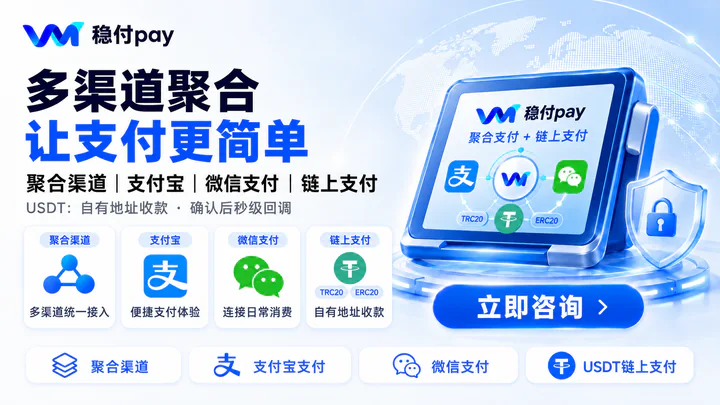
USDT goes directly to your Tron (TRC20) or Ethereum (ERC20) address. Small site owners use monitoring and callbacks free of charge, with server and maintenance costs covered by us; enterprise services are priced separately.
We were once small site owners too. Today, we want to offer fellow site owners more support with payments, technology and resources.
USDT monitoring and callbacks · Free for small site ownersDefine requirements, then validate payment, callbacks and order status. Every step has checks you can follow.
Discuss business type, payment scenarios and estimated order volume.
Use case → Payment methodConfirm availability, fees and integration parameters.
Agreed solution → ConfigurationCheck signatures, amounts and handling of repeated notifications.
User payment → Order confirmationCheck initial orders and keep logs and troubleshooting access.
Validated setup → Gradual launchChoose collection channels based on user habits, devices and order handling requirements.
For users who primarily pay with Alipay, confirm H5, QR and order callback integration first.
Explore Alipay channels →For the WeChat ecosystem and mobile use, assess native channels, personal QR and exception handling by device context.
Explore WeChat channels →Combine payment methods while keeping order fields, channel switching and business status consistent.
View product guide →Available channels, fees and settlement arrangements depend on the configuration confirmed after discussion.
Build a clear confirmation flow from payment results to fulfillment. Investigate delays, repeated notifications or channel disruptions using order records.
Match each payment record to one business order for queries and reconciliation.
Check callback signatures, payment status, order IDs and amounts.
Repeated notifications must not duplicate fulfillment or accounting.
Keep key records and systematically review callbacks and exception orders.
Keep parameter configuration, signature checks, callback handling and launch checks in one checklist. Validate in a test environment before moving real traffic.
Read the payment integration checklist →// Link a payment order to your business system { "order_no": "WF-DEMO", "amount": "39.90", "payment_method": "alipay / wechat" } // After the callback reaches your business system Verify signature → Check order and amount → Update order status // Repeated notifications: complete each order only once
Find practical answers on VPN and network operations, digital delivery platforms, order callbacks and USDT settlement.
Link two genuine payments to the original purchase, distinguish repeated notifications from additional receipts, and reconcile delivery and after-sales handling after a channel switch.
Trace redirects and 403 responses before order handling; distinguish browser sessions from server-notification verification, preserve page protections and reconcile older paid orders safely.
Confirm scope when adding a domain, app or product to an existing WeChat, Alipay or UnionPay collection integration; define the configuration boundary and preserve old-order handling.
Track trial time, trial traffic, verified payment and paid authorization separately when converting a VPN trial; handle start boundaries, repeated notices and failed external activation.
Separate gift codes from WeChat or Alipay purchases on a comics site; reconcile stacking, repeated redemption, refund effects and account ownership with an explainable entitlement ledger.
Reconcile CNY orders, conversion quotes, fee responsibility, on-chain transfers and receiving-tool credits when merchant USDT receipts differ from the agreed settlement amount.
Understand channels and integration methods, then describe your business needs.
Browse the full FAQ →Consider user payment habits, device contexts such as WeChat or browsers, order volume and development resources. You may also assess combined channels; for availability, see Products。
Business requirements and channel configurations vary. Provide your business type and order volume, then use contact page to confirm the arrangements.
Browser redirects can be interrupted. Verify server notifications or active query results before updating order status. See the callback handling guide。
Prepare a business description, key payment scenarios, order volume, a publicly accessible callback URL and developers to support integration. Follow the Integration to validate each step.
Tell us your business type, main payment methods and estimated volume so we can identify suitable channels and integration steps together.
Contact 稳付payChoose a payment method, business use case or problem to explore related services and articles.